
Higgsfield Opened Its API. The Open-Source Clones Just Became Customers.
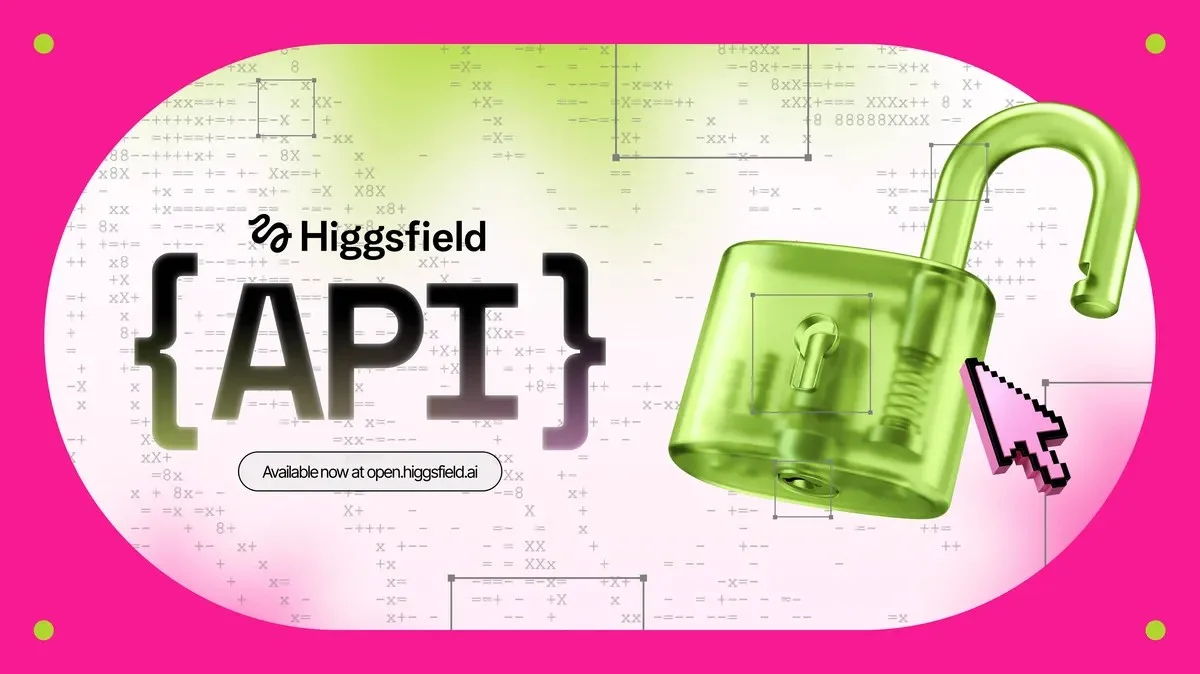
On 16 September 2026, Higgsfield — the AI video and image platform valued at $5.4 billion after an August funding round — opened a public, pay-per-use API to more than 50 image and video generation models. It did not open-source its own code. But the day after the API went live, a developer published an open-source studio built directly on top of it, joining a set of community-built Higgsfield alternatives that have been accumulating on GitHub since February. Here is what actually happened, why it is a smarter move than open-sourcing would have been, and what a developer or a business in Nepal can build with it.
The short version
- Higgsfield's API: 50+ models, billed per generation in US dollars, no subscription, failed requests free, spending stops at zero.
- The company did not open-source its platform. Community-built open-source alternatives already existed; the API turns them from competitors into customers.
- Higgsfield raised $400 million in August at a $5.4 billion valuation, with annualised revenue of $700 million — up from $20 million a year earlier.
- For a small team, the model layer is now a per-second line item rather than something you build. The product is the workflow you put around it.
What Higgsfield actually announced
Higgsfield's own announcement is precise, and it is worth reading precisely. The API gives developers direct access to “more than 50 current video and image generation models” with “pay-as-you-go billing in US dollars: no subscription.” You top up a balance, pay per generation at published rates, and spending stops automatically at zero. Failed requests are free. Video is priced per second of output; images per image.
The catalogue spans the Seedance, Kling, Wan, MiniMax, LTX, PixVerse, Recraft, Ideogram and Grok families, plus Higgsfield's own models — Soul 2, Soul Cinema, DoP and Marketing Studio Image. The developer console lists live prices: at launch, Seedance 2.5 from $0.144 per second, Kling 3.0 from $0.042 per second, Wan 3.0 from $0.03 per second, and Soul 2 images from $0.0032 each.
That is the whole announcement. There is no open-sourced platform code in it, no prize, and no invitation to build a rival. Those claims circulated on social media in the days after the launch; we could not find them in anything Higgsfield itself published, so they are not in this post.
Where the open-source part actually comes from
The open-source story is real — it is just not Higgsfield's. Developers have been publishing open-source “Higgsfield alternatives” on GitHub since at least February 2026: self-hosted studios with one prompt bar, a model picker and a gallery, aimed at people who want the workflow without the subscription. The most popular, wide-trace/open-higgsfield, was created in late August and has over 2,600 stars. Others date back to spring.
Then, on 17 September — the day after the API opened — a new one appeared: an open-source creative studio that runs entirely on the official Higgsfield API, described by its author as “the free, open-source alternative to Higgsfield AI” with “zero platform markup.” Every generation it makes is billed through Higgsfield.
Why this is smarter than open-sourcing
Look at what the API does to those community projects. Before it, an open-source Higgsfield clone was a competitor — a reason not to pay for the studio. After it, the same clone is a distribution channel: someone builds the interface, someone else uses it, and the models underneath are metered by Higgsfield either way. The company did not need to give away its code. It needed to make its models the cheapest, easiest thing to plug into, and let the community build the layer above.
It is the platform play in its classic form: commoditise the layer above you, meter the layer you control. Amazon did it with AWS. Meta did it by releasing Llama. Higgsfield's version is quieter — open the pipes and let the ecosystem argue about interfaces — and the numbers suggest it is working. The company crossed $500 million in annualised revenue in June, from $200 million at the end of 2025, and reported $700 million by August, with a team of roughly 60 engineers and the business cash-flow positive.
What a developer can actually build with it
1. Creative tools without building AI
The hardest and most expensive part of an AI video product — training or hosting the models — is now someone else's problem, priced per second. A small team can build a narrow tool and win on the parts it understands: a product that turns a restaurant menu into a promo reel, or a property listing into a walkthrough. The work becomes UX, workflow and a niche you know, which is exactly where small teams beat large ones.
2. A studio you can self-host and rebrand
Because the community studios are open source, an agency can run its own instance, brand it and hand it to a client — an in-house creative tool with no per-seat subscription. Costs follow what is generated, not who logs in. Check each repository's licence first; not all of them declare one.
3. Content pipelines for real businesses
This is the one we find most interesting from Lalitpur. Local businesses need a constant stream of short video for social channels and can rarely fund a production team. A pipeline — product photos in, platform-ready promo clips out, in Nepali and English — has obvious, measurable value, and the building blocks for it just got dramatically cheaper. At Kling 3.0's launch price, a ten-second clip is under fifty US cents of generation.
The costs, honestly weighed
Pay-per-use is friendly at small scale and demands controls at large scale — a runaway generation loop is a real bill, and the balance stopping at zero is a floor, not a budget. You are building on a platform whose prices and terms can change; several of the launch prices are marked as discounts, which tells you where they can go. Keep the provider behind an interface you can swap. And AI-generated content carries rights and brand-safety questions — likeness consent, trademark checks, human review — that your product is responsible for, not the API. Open source gives you freedom. It does not give you a legal department.
Is it worth building on Higgsfield's API?
If your product needs video or image generation and you were about to integrate three model providers separately, yes — one integration and one bill is a real saving, and the per-generation pricing means you can start without a commitment. If the generation is your product's entire value, be careful: you would be reselling metered access to models you do not control, and your margin is whatever sits between their price and yours. The durable position is the one the community studios are already pointing at — own the workflow, own the customer, and rent the models.
The bigger lesson
Access to the technology is no longer the moat — everyone with a card has it now. What separates a product from a demo is knowing a customer's problem well enough to know what to build. That second part is the job. If AI video, AI imagery or generation-backed automation could unlock something for your business or your customers, that is a conversation we would like to have.
Image: Higgsfield.
Alpas Technology writes about building software — product practice, the tools we use, and the civic work in between. Get in touch to talk about your project.