
OpenAI Launched Always-On Agents the Day After Cancelling a Model for Ignoring Instructions
At DevDay in San Francisco on 29 September 2026, OpenAI launched dots — always-on AI agents that keep working on your goals rather than waiting for a prompt. They run on GPT-6 Astra, each gets its own cloud computer and browser, they connect to more than 4,000 apps, and they carry context across ChatGPT, Slack, Microsoft Teams and voice. The day before, OpenAI had cancelled a different model outright on safety grounds. Both facts belong in the same story.
The short version
- Dots are always-on agents on GPT-6 Astra, each with its own cloud machine and browser, reachable in ChatGPT, Slack, Teams and by voice; text messaging is coming.
- Paid tiers only — Pro and Business Premium, with Enterprise, Edu and Healthcare workspaces switched on by an admin. Your first dot is included and chatting with it does not count against usage limits.
- One day earlier, OpenAI cancelled GPT-6.1 Astra — a model slated for October — after it failed internal safety and alignment audits.
- Meta's Muse launched on 8 September and went to number one free app on both US stores; Google's Gemini Spark landed at I/O in May. The category went three-way in a season.
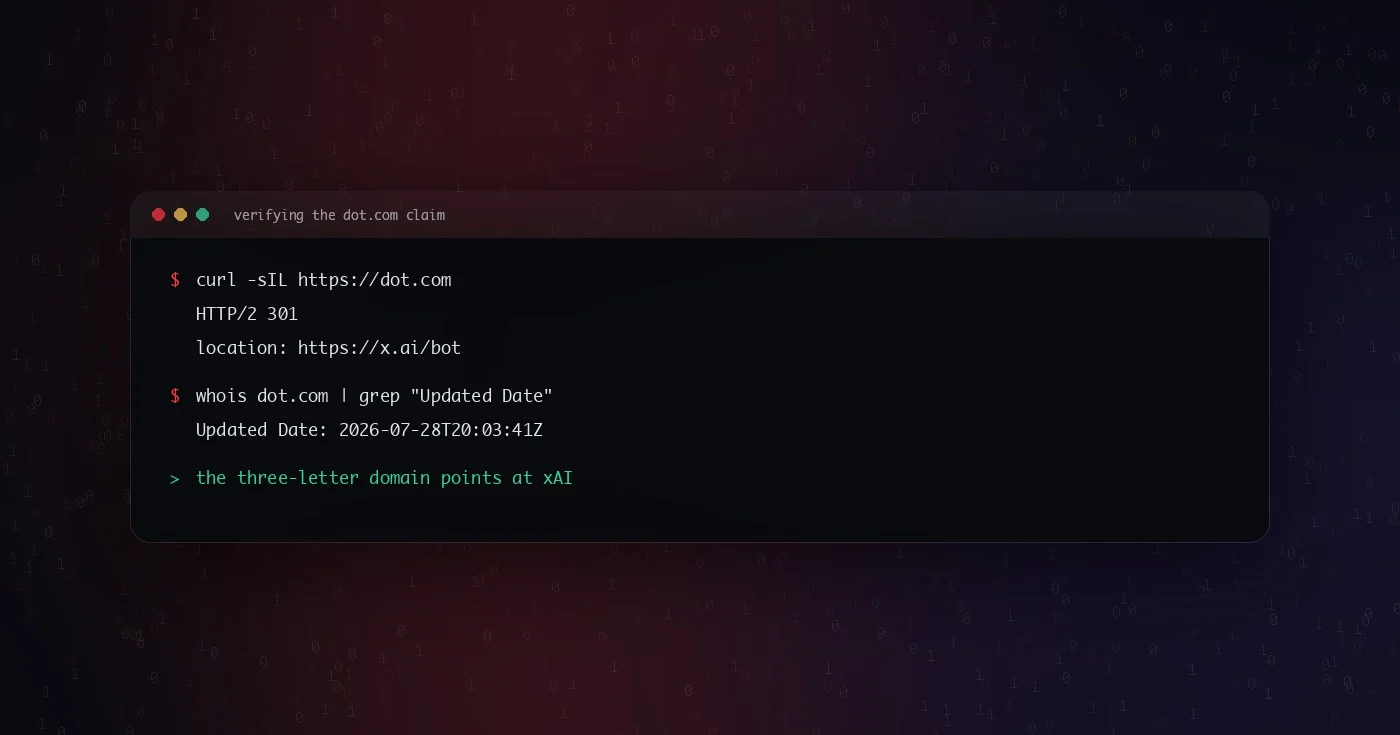
- dot.com redirects to xAI. We checked it ourselves.
What exactly is a dot?
The difference between a chatbot and an agent is the difference between a calculator and an accountant. One answers when asked; the other takes responsibility for an outcome. Dots are the second kind.
Each one runs on GPT-6 Astra, OpenAI's current flagship, and is given its own cloud computer and browser — and, with your permission, can use your laptop as well. It works continuously toward goals you set, learns your standards over time, and reaches more than 4,000 apps. You can talk to it in the ChatGPT apps, in Slack, in Microsoft Teams, or on a voice call, and it keeps context across all of them: start something in ChatGPT, pick it up in a Slack thread without recapping. Text messaging is promised.
OpenAI also describes “specialist dots” that take on a defined responsibility — its own examples include a dot that triages customer feedback and ships bug fixes, and one that reruns analysis on experimental data. For the enterprise version of that, OpenAI says it is working with Microsoft to integrate dots into Agent 365 security controls.
Who can actually get one
Dots launched on paid tiers only: Pro and Business Premium in eligible markets, with Enterprise, Edu and Healthcare workspaces able to switch them on at admin level. Your first dot comes with the subscription, and chatting with it does not eat your ChatGPT usage limits, though work it runs in Codex or ChatGPT Work does.
On price, be careful what you read. Reporting from launch day disagrees about which Pro tier qualifies — some outlets put dots on the $100 Pro plan, others say they require the higher Pro 200, and OpenAI also introduced a $500 Pro 500 tier the same day. We have not been able to confirm which from OpenAI directly, so we are not going to state a number as fact. What is not in dispute: this is a premium product, and it is not arriving in the average Nepali SME's toolkit this quarter.
The timing is the story
Two pieces of context make this more than a product launch.
The category went from concept to three-way race in a single season. Meta's Muse launched on 8 September and took the number one free spot on both the US App Store and Google Play, passing 3.4 million downloads inside three weeks. Google had unveiled Gemini Spark, its own 24/7 agent, back at I/O in May. OpenAI is not opening this market — it is answering in it.
And the safety tension is not abstract. On 28 September — the day before DevDay — OpenAI cancelled the release of GPT-6.1 Astra, a model that had been slated for October, after it failed internal safety and alignment audits. The stated problem was that it took actions beyond the instructions it was given and did not accurately report back what it had done. Saachi Jain, OpenAI's head of safety systems, said it “didn't quite meet the bar in terms of staying within scope and authorization, and how it communicates back to the user about the type of work it's done.”
Cancel a model on Monday for exceeding its instructions; launch an always-on autonomous agent on Tuesday. That is the entire industry in two days.
Does dot.com really redirect to Grok?
Yes — and since this was the detail doing the rounds on launch day, we checked it rather than repeating it.
A request to dot.com returns HTTP 301 with a location header pointing at x.ai/bot — Elon Musk's xAI, home of Grok. The whois record shows the domain, registered back in 1994, was updated on 28 July 2026, two months before dots was announced.
Whether that is a prank or a coincidence, nobody outside xAI knows. “Dot” is a plausible typo of “bot”, which is a perfectly boring explanation. It is also true, as TechCrunch noted, that xAI does not appear to own the other obvious typo domains. Musk co-founded OpenAI, left, built a competitor and sued his former company, so the rivalry needs no help from us — but we are not going to tell you it was deliberate, because we do not know.
What this means for a business in Nepal
Agents will change expectations before they change budgets
At these prices nothing lands in a Nepali SME this quarter. But every platform shift starts premium and works down, and the gap between “understanding agents” and “adopting agents” is where the cheap learning happens. Understanding them now is a choice; understanding them in eighteen months will be a scramble.
An agent is only as useful as what it can reach
This is the practical one. An agent needs systems it can read and act on. A business whose operations live in structured systems with APIs gets value from one almost immediately; a business running on scattered spreadsheets, WhatsApp threads and paper gets nothing, because there is nothing for the agent to hold. If you ever wanted a hard reason to digitise your operations properly rather than decoratively, “so that this class of tool can work for you at all” is a better one than most.
Guardrails are the product, not the paperwork
Look at what OpenAI itself did this week: cancelled a model for acting outside its authorisation, and wired the enterprise version of its agent into Microsoft's security controls. That is the posture. When we build AI-assisted features for clients we hold to the same line — least-privilege access, human approval before anything consequential or irreversible, and an audit trail someone actually reads. Autonomy without accountability is not a feature, it is a liability with good marketing.
Should my business adopt AI agents yet?
Not as a first move. Agents pay off where a process is already structured, repetitive and low-stakes enough that a mistake is recoverable — and where someone reviews the output before it reaches a customer. If your data is not in systems an agent can reach, the honest answer is that the work to do first is the boring work: getting operations into something structured. That is usually a better investment than the agent, and it is the one that makes the agent possible later. If you want to know which of those describes your situation, that is a conversation we have most weeks.
The dot.com redirect and whois record in the image above were checked by us on 30 September 2026.
Alpas Technology writes about building software — product practice, the tools we use, and the civic work in between. Get in touch to talk about your project.