
Nagarik Alert in the News: 6,500 Complaints, 500 Fixed, and a Disaster Role We Never Planned
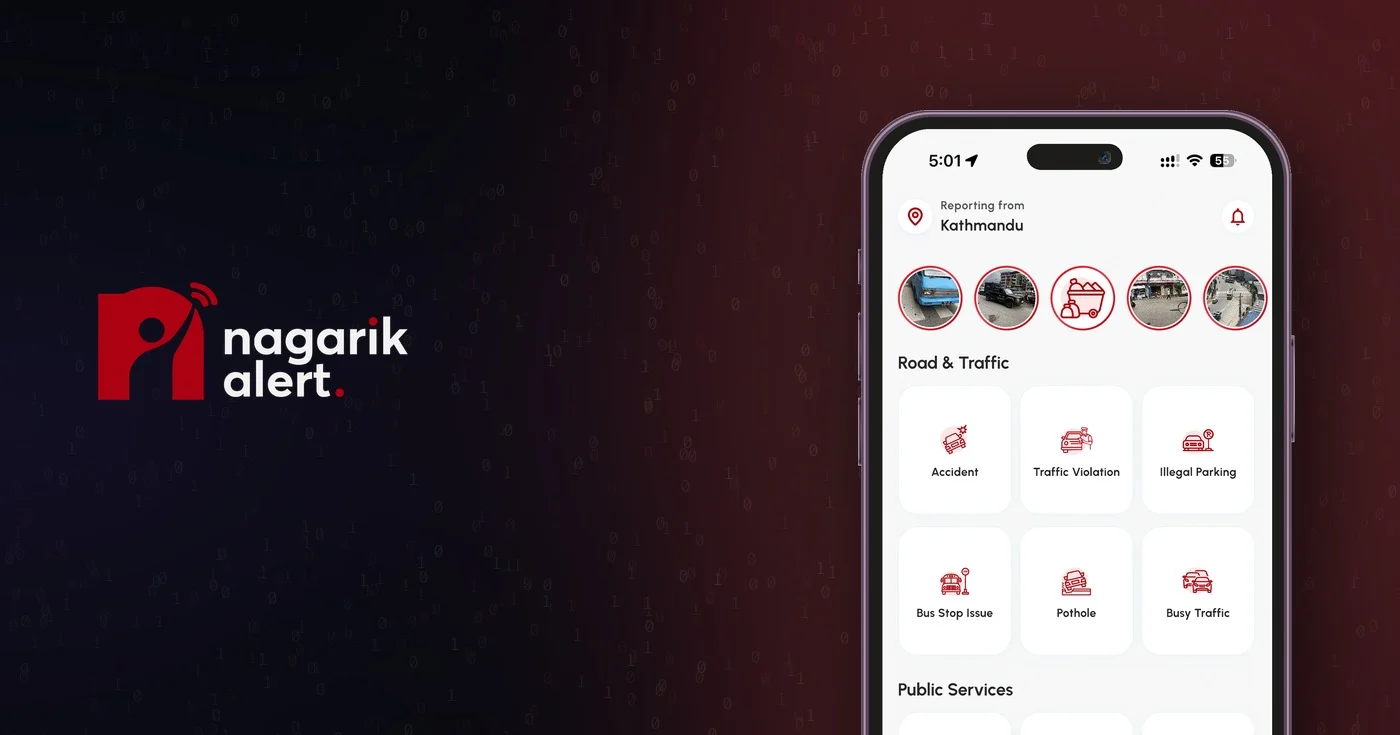
On 23 September 2026, Ratopati published a feature on Nagarik Alert, the civic reporting platform we build in Lalitpur, in both English and Nepali. The figures it reported: roughly 6,500 complaints registered in about four months, more than 1,900 in the process of resolution, more than 500 fully resolved, 400 escalated to higher authorities, and over 20,000 downloads. This post is our account of what sits behind those numbers — including the part we did not plan for.
The short version
- ~6,500 complaints registered in about four months; 1,900+ in progress, 500+ resolved, 400 escalated.
- 20,000+ downloads, with awareness videos reaching over 39 million views and more than 2 million people organically.
- The app grew into a disaster-relief channel during recent floods and landslides — something that was never in the plan.
- Free for citizens. The platform sustains itself by providing verified civic data to government and non-government organisations.
- Next: SMS complaints for people without a smartphone, QR tagging for property, deeper disaster coordination, and 100,000 phones within two to three years.
The problem it was built to remove
Anyone living in Nepal knows the feeling. You pass the same pothole every morning. The streetlight has been dark for months. The drain overflows every monsoon. You would complain, but complaining means phone calls that go nowhere and paperwork that eats an afternoon. So most people stop reporting, and the problem stays.
Nagarik Alert exists to remove that friction. Open the app, photograph the issue, tag the location, pick a category, and the complaint is registered in seconds. From there it travels to the desk of whoever is responsible, through partnerships with municipalities and government departments.
It was designed for Nepal rather than for a generic market. It works in Nepali and English. Locations pin down to tole, ward, municipality, district and province. The categories reflect our roads and our realities — Road and Traffic, Public Services, festival-season congestion included. And because a city is more than its faults, a Share Progress feature lets people post the good news too: a road finally blacktopped, a pipe repaired, a notice worth passing on.
What four months of trust looks like
The numbers Ratopati reported are worth stating plainly, because each one is a person who decided it was worth trying: around 6,500 complaints registered in roughly four months, more than 1,900 in the process of resolution, more than 500 problems completely resolved, and 400 forwarded to higher authorities. The app has been downloaded more than 20,000 times, helped by awareness videos that reached over 39 million views and more than 2 million people organically across TikTok, Facebook, Instagram and YouTube.
Behind each resolved complaint is the moment the whole thing was built for: someone seeing, often for the first time, that raising their voice changed something on their own street.
The part we did not plan for
Nagarik Alert grew into a disaster-response channel, and that was not in the design. During recent floods and landslides, affected families used it to request what they actually needed — food, medicine, clothing, solar power banks, sanitary pads — and relief went to the front lines on the basis of those requests.
That was only possible because people and organisations stepped up: former minister Sumana Shrestha, former Nepal Electricity Authority managing director Hitendra Dev Shakya, Gen-Z activist Miraj Dhungana, and groups including Dahari Gang, the Nepal Electricity Authority and Pro Riders Group. Relief work was never in the business plan. Being useful in the moment someone needs it is exactly what a civic platform should be for.
The app also carries early warnings — floods, landslides, heavy rain, road blockages — so people can act before something happens rather than only report it afterwards.
The hard part, said out loud
The early months were not easy, and it is worth being honest about why. Citizens doubted whether a complaint would be read by anyone. Government agencies asked whether enough people used the app to justify their attention. Both doubts were reasonable, and neither could be argued away — the only answer to either was results. Complaints now arrive daily and resolutions come back out, and that is how the doubt was worked through: one fixed pothole at a time.
Nagarik Alert is free for citizens and stays that way. The platform sustains itself by providing verified civic data to government and non-government organisations, which means the incentives point in the same direction as the public's — more reports, better data, faster resolutions.
What happens next
The roadmap Ratopati reported: reaching more than 100,000 Nepali phones within two to three years, QR tagging for the security of citizens' property, deeper disaster-management coordination, and a complaint system that works over SMS so that people without a smartphone or a data connection are not left out. Beyond Nepal, there is groundwork under way to take the platform international.
The SMS piece matters more than it sounds. A civic platform that only reaches people with a smartphone and data has quietly decided whose problems count.
How do I report a problem in my area?
Download Nagarik Alert, photograph the issue, tag the location down to your tole or ward, choose the category, and submit. It is free, it works in Nepali and English, and you can follow what happens to the report afterwards. If your organisation works with civic data, disaster response or public services, we would like to talk.
Figures in this post are as reported by Ratopati on 23 September 2026. Image: Nagarik Alert.
Alpas Technology writes about building software — product practice, the tools we use, and the civic work in between. Get in touch to talk about your project.